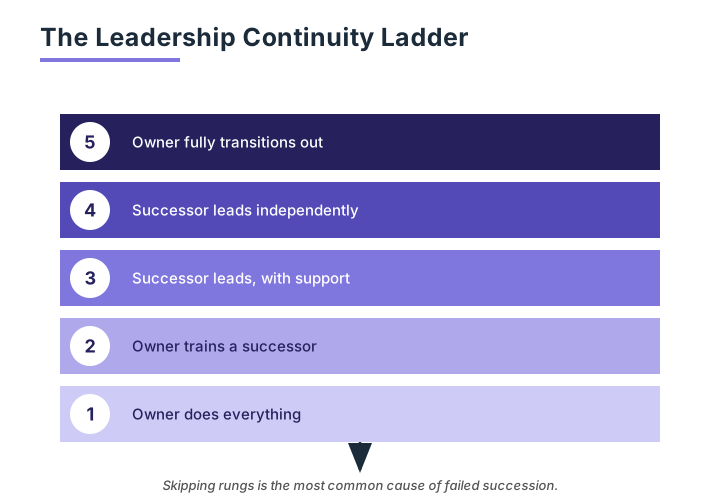
Several months later, one of the company's branch managers accepted an opportunity to relocate with her family. Years earlier, an announcement like that would have created real panic. Instead, her prepared successor someone who'd been deliberately developing into the role for nearly two years stepped in smoothly. Employees kept working without missing a beat. Customers noticed no disruption at all. At the next leadership meeting, the team congratulated both the departing manager and the new one, warmly, without any of the anxiety such a transition once would have caused.
Afterward, Mike said, "That felt... almost ordinary."
Sarah smiled. "Exactly."
Mike laughed. "I thought succession would feel emotional."
"It is," Sarah said. "The emotional work just happened over the last three years, not in that meeting."
Mike watched the new branch manager confidently lead the afternoon's planning session, already comfortable in a role that used to belong to someone else. For the first time, leadership transitions had become part of the company's normal rhythm not a crisis to survive, but simply how a mature organization moved forward.
As Mike watches another generation of leaders emerge, he realizes leadership continuity alone isn't enough. Even the strongest organizations will eventually face economic downturns, industry disruption, and unexpected adversity that no succession plan alone can prevent. Chapter 43 is where the challenge shifts from succession to something even larger: resilience through every cycle the company will ever face.