Then the small things started showing up.
A customer mentioned she hadn't gotten the courtesy call before arrival. An invoice came back missing the completion photos the checklist called for. A job-completion checklist sat unsigned in the truck. The truck itself was running low on a few parts it should have been restocked with the night before.
None of it was serious on its own. Together, it felt like something slipping.
Mike responded the only way he knew how — he started checking everything personally. Reviewing every invoice before it went out. Calling customers himself after every visit, just to be sure. Double-checking checklists that had already been signed.
His technician finally said something, quiet and direct. "Mike. Do you trust me?"
Mike paused, caught off guard. "I do
"It doesn't always feel like it."
Mike felt terrible the rest of the day. That night, he told Sarah, "I don't know how to let go without losing quality."
Sarah smiled, gently. "Good. That's the question every leader eventually asks."
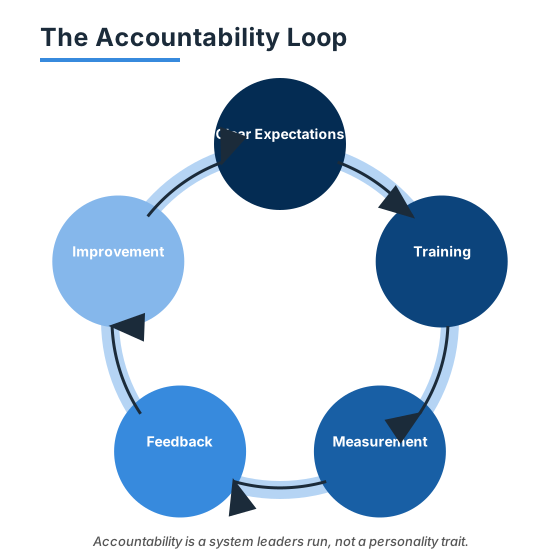
Accountability creates freedom. Not the other way around — and Mike had just discovered what happens when an owner tries to skip straight to trust without ever building the accountability that makes trust safe to give.
The Challenge
Systems, from Chapter 13, solve the knowing problem - they make sure an employee has a clear answer for how to do something. They don't automatically solve the doing problem - whether that answer actually gets followed every single time, especially when nobody's watching.
Mike's instinct, once small inconsistencies appeared, was to swing hard toward control - checking everything personally. That instinct feels responsible. It's actually just the Hero Trap from Chapter 5 wearing a supervisor's clothes, and it teaches an employee exactly the wrong lesson: that their judgment doesn't matter as much as the owner's presence.