Several weeks later, a dispatcher noticed an issue that, six months earlier, would have caused a major scheduling crisis. Instead of calling Mike, she simply followed the documented process. The problem was resolved within minutes. Nobody stayed late. Nobody became the hero of the week.
At the weekly leadership meeting, Mike asked, almost casually, "What happened with Tuesday's scheduling issue?"
Jake shrugged. "It never became an issue."
Mike laughed. "That's it?"
"The system handled it."
Sarah smiled from across the table. "The greatest compliment a system can receive is that nobody notices it."
A week later, that same dispatcher noticed something else an extra verification step in the scheduling process that hadn't actually prevented a problem in months, just added a few minutes to every call. She didn't wait for permission to complain about it. She wrote up the change, proposed it at the next huddle, and Jake approved it on the spot. The updated process rolled out to every branch by the following Monday, not just her own.
Sarah heard about it secondhand and smiled. "That's when you know you've built a system. It gets better without waiting for the owner."
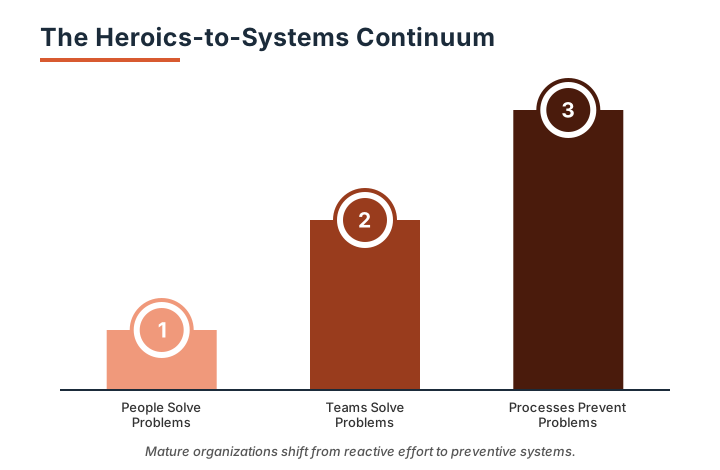
Mike looked around the room. "I used to think success meant solving bigger problems." He paused. "Now I think it means preventing them."
Sarah nodded. "And that's exactly how companies become scalable."
Chapter 39 is where you learn how to expand into new territory without losing the control it took this long to build.